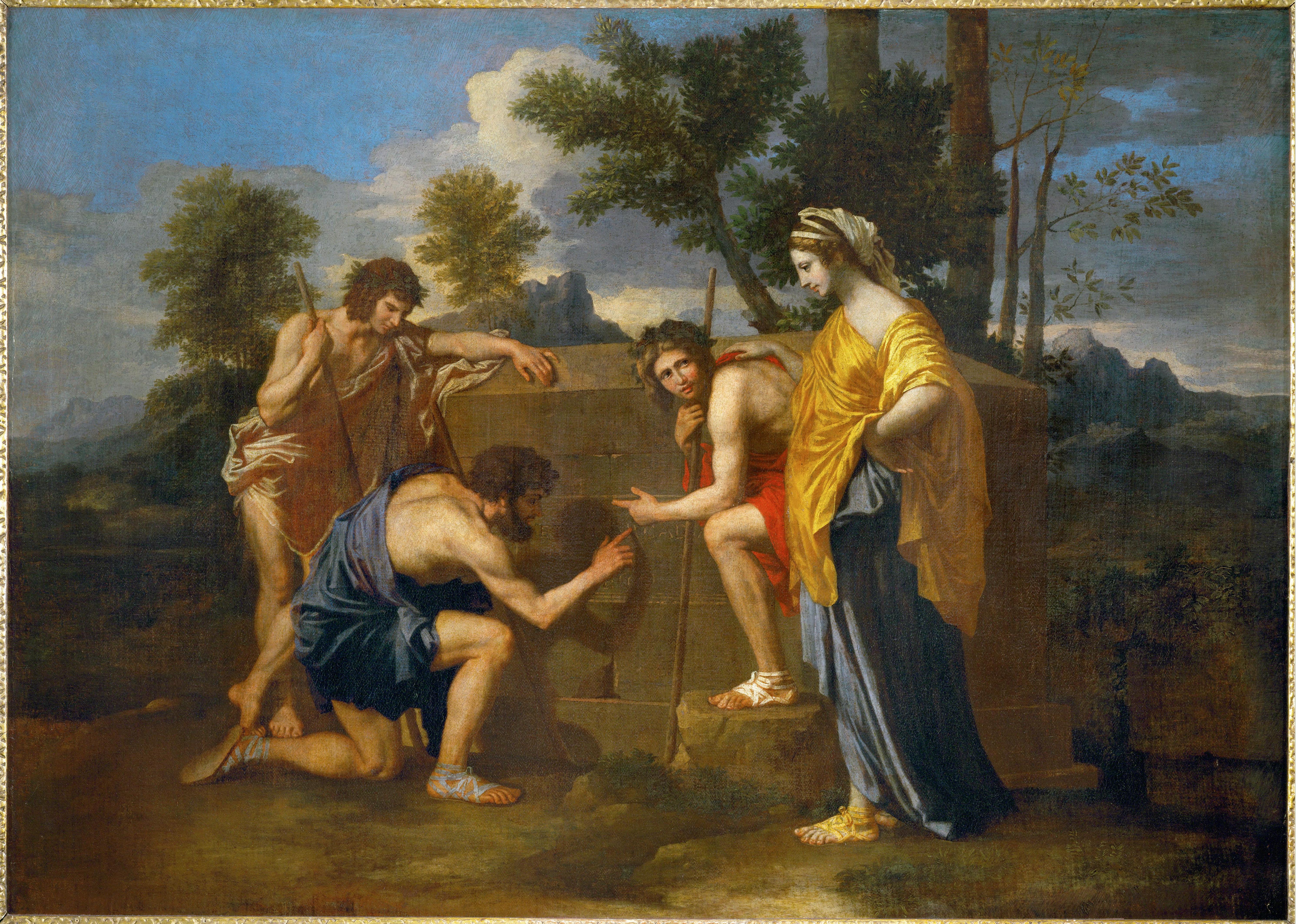
Last night, when I was talking to fish, he revealed to me that he too had studied Latin. I asked him why. He said it was because of this painting:
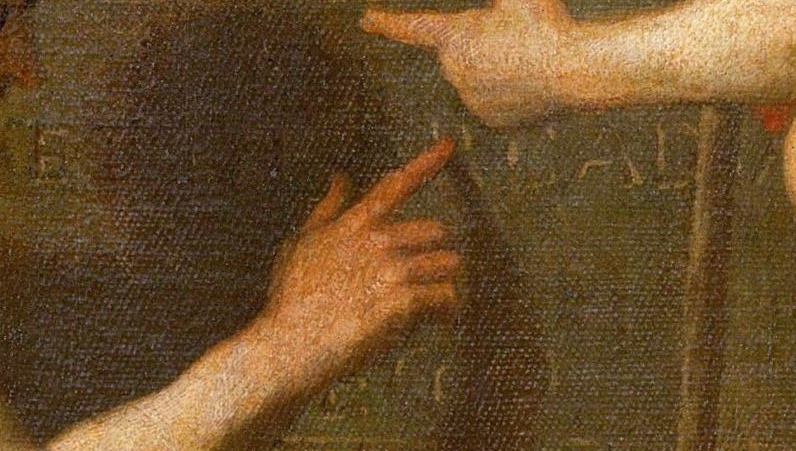
If you look closely to where the shepherds are pointing, there's the inscription "Et in Arcadia Ego," which ultimately derived from a line in Vergil's Eclogues.
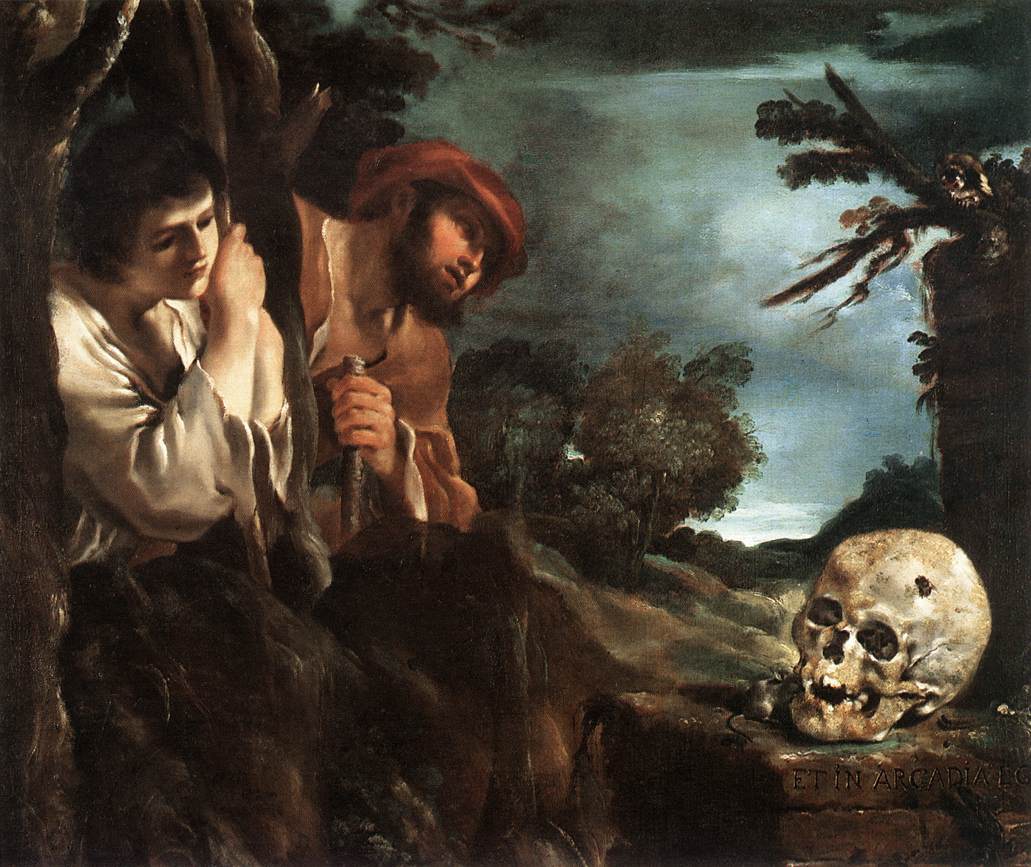
Here's similar painting on the same theme that shows the inscription more clearly.
This got us talking about Vanitas and Memento Mori, which reminded him of Li Song, whose most famous painting is of a skeleton using another smaller skeleton to do a puppet show.
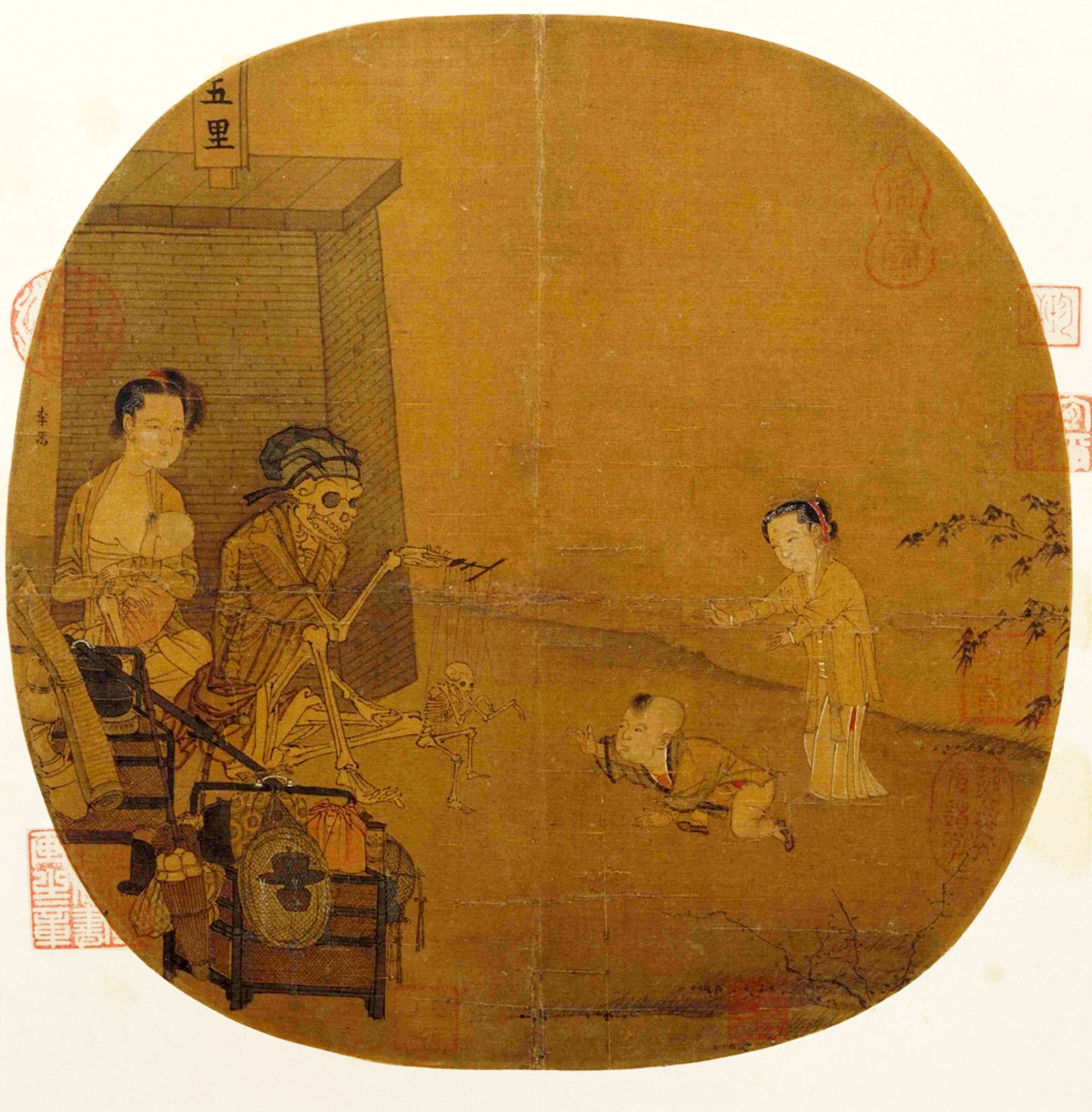
"If you want to sound like a cool guy, Li Song's a good painter to know about," fish said. "Even most Chinese painters don't know about him."
When I was recollecting this conversation early today, it made me a little sad. I'd like to think that an encounter with a new artist enriches me in some way, but I'm not sure what to do with each new painting I see. In certain moods, I feel more "at one" with paintings than I do music or novels or movies, and yet paintings feel more ethereal and removed to me. Music and movies need to be "played," and books at the very least need to be opened, but paintings -- real physical paintings in frames that hang on walls -- they just exist. Whatever scenes or "harmonies of colors" they contain remain in stasis, indifferent to whether or not I'm looking at them, living on without need for the human race that created them.
I feel like art is something I'm supposed to "wrestle" with, or at least knead in my mind as I go about my day. Novels are long and need to be read in multiple sessions, which makes that kneading process more or less automatic. The time it takes me to traverse through the story is long enough that I have time to think about odd turns of phrases the author uses, or notice real life friends displaying behavior reminiscent of the novel's characters I'd never noticed before. Yet paintings present me the same conundrum that haiku do: they enter my mind in an instant, with minimal obstruction. Once I've seen a painting, what should I do next?
I always imagine it would be easier if I were a painter myself. Then I would have at least one thing I could do with every painting I see: incorporate it into my own art. But I’m not a painter. I'm a man of no talent, who spends his days in bed, remembering encounters he's had with images he can no longer call to mind.
Whistler was the first painter I ever spent much time really looking at. He's who I stole the term "harmony" from above. I got interested in him because of the Ezra Pound poem where Pound speaks to him as a kind of beacon of hope shining out of the previous generation:
To Whistler, American
On the loan exhibit of his paintings at the Tate Gallery.
You also, our first great,
Had tried all ways;
Tested and pried and worked in many fashions,
And this much gives me heart to play the game.Here is a part that's slight, and part gone wrong,
And much of little moment, and some few
Perfect as Dürer!"In the Studio" and these two portraits, if I had my choice!
And then these sketches in the mood of Greece?You had your searches, your uncertainties,
And this is good to know—for us, I mean,
Who bear the brunt of our America
And try to wrench her impulse into art.You were not always sure, not always set
To hiding night or tuning "symphonies";
Had not one style from birth, but tried and pried
And stretched and tampered with the media.You and Abe Lincoln from that mass of dolts
Show us there's chance at least of winning through.
When I reread this poem, I often wonder who my Whistler is. Do I know anyone who's born the brunt of America and wrenched her impulse into art?
These are the two paintings he references:
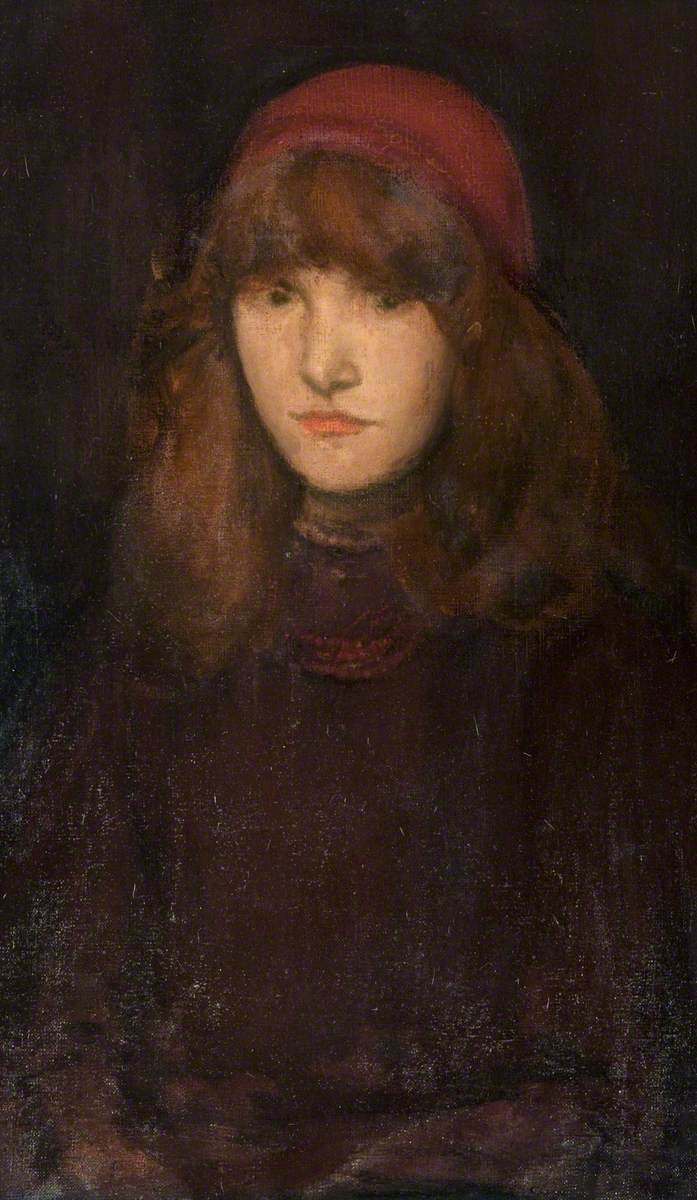
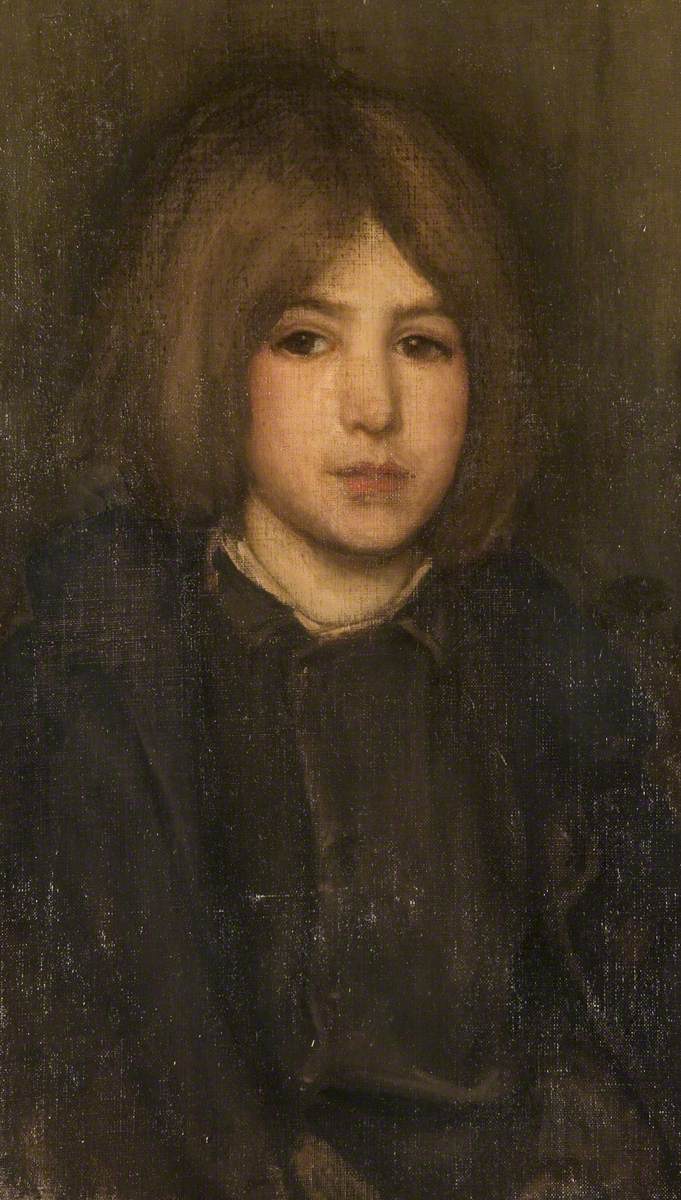
My taste in Whistler might have been a little different from Pound's. I liked the late 19th century decadence in his more colorful paintings:
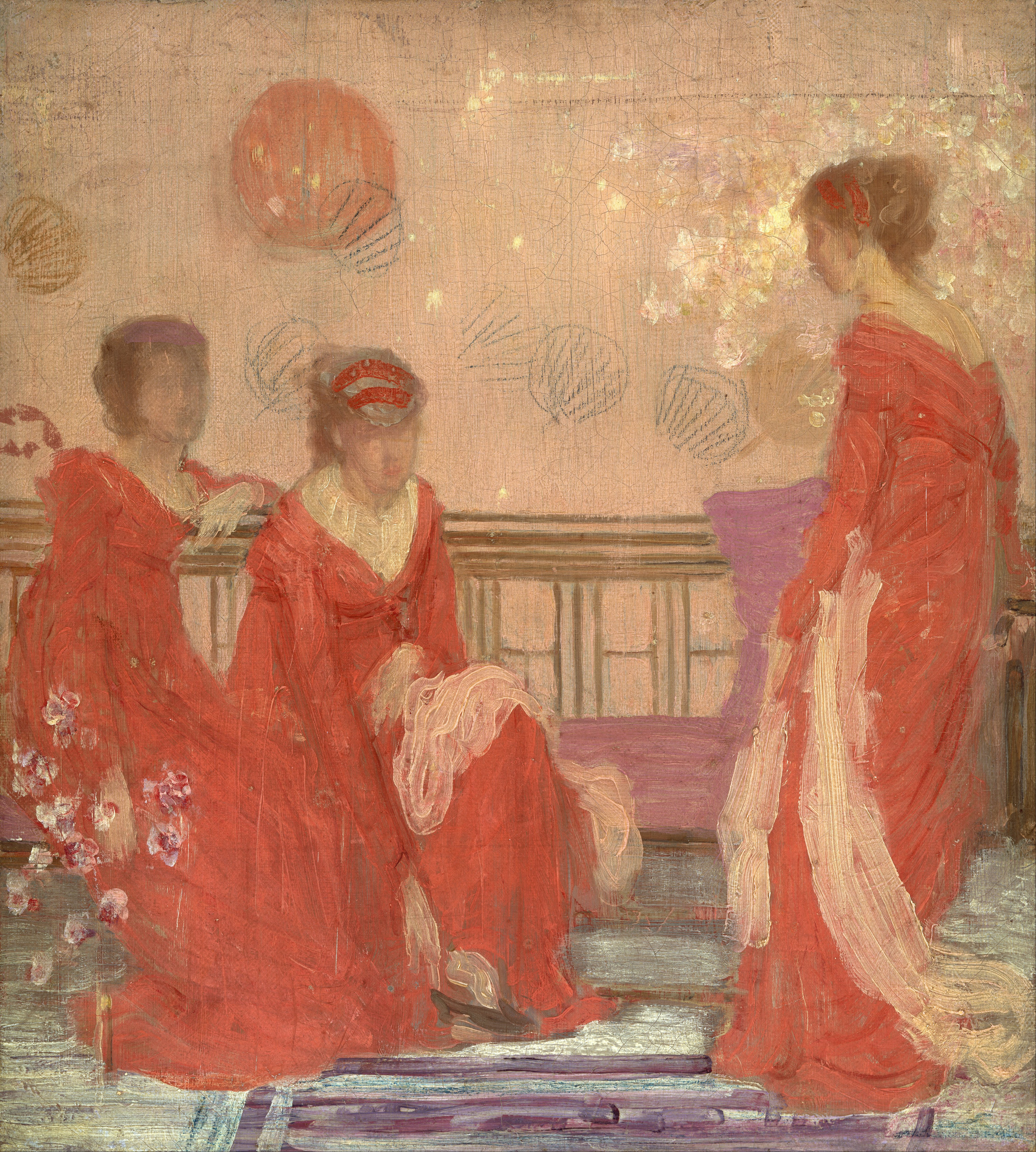
As a youth, I tried my hand making pencil copies of his portraits -- the subtle differences in colors made them really hard to get right, which was probably a good exercise. There was a time in my life where I used to tell people I'd always wanted to be a painter growing up, as though that was something I was proud of. I was mostly thinking of those days making Whistler copies. It seemed cooler to me to be a failed painter, than to be a wannabe game designer or whatever else it was I was half-identifying as when I was 19.
For the most part, I've only seen most "great works of arts" through my computer screen. When I try zooming in on them, they just become pixellated messes. From a distance, the pink sausage like streams of paint that are supposed to be ribbons in drapery in the above painting dazzle the eye -- they look something I could reach out and feel with my fingers. But on my computer they're just an illusion. If I try to look closely, they're just little flat squares of colors. Prints of paintings in books aren’t really much better either. I have access to all the art in the world, but only cheap flat reproductions. They're nothing like what Mario 64 had led me to believe paintings could be. When I try to leap inside of them, there's nothing there but my own reflection.
This is something I also struggle with when it comes to vision "in real life." When I look out my window right now at the lights from distant skyscrapers and the dark mist above us -- it seems like I'm seeing something. But when I really try to look at any individual object -- say, the potted plants that line the highway beneath my apartment building -- it's nothing but splotches of color emerging from "the grain of my own ocular nerve," much like a face in memory that feels so clear until I try to sketch and realize the clarity was all an illusion. I'm never actually seeing anything. I start to question how I've managed to get this far in life. I keep imagining I've seen art before, but it seems more accurate to say I've only seen the "glow of art", refracted in the omnipresent vapors of vision.
What am I to do then? I don't really have an answer to that, but I figure I might as well begin my own "searches and uncertainties," to quote from the Pound poem again. This page, then, will be where I put my notes as I continue to think about paintings.